
Physical Examination & Health Assessment (Jarvis PDF): A Comprehensive Guide
Physical Examination and Health Assessment, 8th Edition, by Carolyn Jarvis, is a foundational text for nursing practice, offering a holistic approach
to patient evaluation. This comprehensive guide, adapted by Anne Browne, emphasizes critical thinking and evidence-informed assessment techniques.
With ISBN 9780323550031, the resource provides a logical framework for conducting thorough physical exams and health histories across all lifespans.
Jarvis’ Physical Examination & Health Assessment stands as a cornerstone resource for healthcare professionals, particularly nurses, seeking a detailed and systematic approach to patient assessment. This text, currently in its 8th edition and authored by Carolyn Jarvis with adaptations by Anne Browne, transcends a simple procedural manual; it cultivates critical thinking skills essential for accurate clinical judgment.
The book’s core philosophy centers on a holistic view of the patient, integrating physical findings with comprehensive health history data. It emphasizes the importance of evidence-informed practice, guiding users to base assessments on current research and best practices.
This guide isn’t merely about what to assess, but how and why, fostering a deeper understanding of the underlying physiology and pathophysiology. It prepares practitioners to effectively identify normal versus abnormal findings, ultimately leading to improved patient outcomes. The ISBN 9780323550031 identifies the digital and eTextbook versions.

Overview of the 8th Edition
The 8th Edition of Physical Examination & Health Assessment, authored by Carolyn Jarvis and adapted by Anne Browne, builds upon the established foundation of previous editions with updated content and enhanced features. This iteration reflects the latest evidence-based guidelines and incorporates evolving healthcare practices.
Key enhancements include expanded coverage of social determinants of health, cultural considerations, and lifespan-specific assessment techniques. The text maintains its logical organization, progressing systematically through the assessment process, from the initial health interview to comprehensive system-specific examinations.
Readers benefit from clear, concise writing, detailed illustrations, and practical guidance on documentation. The 8th edition continues to emphasize critical thinking, preparing students and practitioners to confidently and competently perform thorough and accurate assessments. Digital access is available via ISBN 9780323550031.
Key Authors: Carolyn Jarvis & Anne Browne
Carolyn Jarvis, PhD, APN, CNP, is the primary author of Physical Examination & Health Assessment, bringing extensive expertise in advanced practice nursing and a dedication to comprehensive patient evaluation. Her work emphasizes a holistic approach, integrating physical assessment with critical thinking and evidence-based practice.
Anne Browne, PhD, RN, adapted the 8th edition, contributing her own significant experience in nursing education and research. Her contributions ensure the text remains current, relevant, and aligned with evolving healthcare standards. Together, Jarvis and Browne have created a cornerstone resource for nursing students and practicing professionals.
Their collaborative effort delivers a text that is both theoretically sound and practically applicable, equipping readers with the skills necessary to conduct thorough and meaningful health assessments. The ISBN 9780323550031 identifies this impactful work.

Foundational Concepts
Physical Examination & Health Assessment emphasizes critical thinking, evidence-informed practices, and health promotion integration as core principles for effective patient assessment.
Critical Thinking in Health Assessment
Critical thinking is paramount in Physical Examination & Health Assessment, serving as the cornerstone of effective clinical judgment. The text, authored by Carolyn Jarvis and adapted by Anne Browne, doesn’t simply present techniques; it cultivates the ability to analyze, interpret, and synthesize data gathered during patient encounters.
Students are challenged to move beyond rote memorization, developing skills in questioning, inference, and problem-solving. This approach ensures nurses can adapt assessments to individual patient needs and recognize subtle cues indicative of underlying health issues. The 8th edition stresses a deliberate, analytical process, encouraging nurses to continually evaluate their assumptions and refine their assessment strategies based on evidence and patient responses.
Ultimately, the goal is to foster a mindset of inquiry and informed decision-making, leading to more accurate diagnoses and effective care plans.
Evidence-Informed Assessment Practices
Physical Examination & Health Assessment, by Jarvis and Browne, strongly advocates for evidence-informed practice. This means assessment techniques aren’t presented as static rules, but rather as tools continually refined by current research and best practices. The 8th edition emphasizes utilizing the latest findings to optimize assessment accuracy and patient outcomes.
The text highlights the importance of understanding the rationale behind each technique, linking it to supporting evidence. This approach empowers nurses to critically evaluate new research and integrate it into their practice. Furthermore, it promotes a culture of continuous learning and improvement within the healthcare setting.
By grounding assessment in solid evidence, the book ensures nurses deliver care that is both safe and effective, contributing to higher quality patient care.
Health Promotion & Assessment Integration
Physical Examination & Health Assessment, authored by Jarvis and Browne, doesn’t view assessment as a purely diagnostic process. Instead, it champions the seamless integration of health promotion strategies during the assessment itself. The text emphasizes that every interaction with a patient presents an opportunity to educate, counsel, and empower them towards healthier lifestyles.
The 8th edition demonstrates how to incorporate health promotion into each system-specific examination. For example, during a cardiovascular assessment, nurses can discuss risk factors for heart disease and offer guidance on diet and exercise. This proactive approach shifts the focus from simply identifying problems to preventing them.
By blending assessment with health promotion, nurses become advocates for patient well-being, fostering a collaborative partnership focused on achieving optimal health.

The Assessment Process
Jarvis’ Physical Examination & Health Assessment details a systematic process, encompassing the health interview, complete history, mental health, substance use, and violence assessment.
The Health Interview: Techniques & Strategies
Jarvis’ text emphasizes the health interview as a crucial component of the assessment process, requiring skillful techniques to gather comprehensive data. Effective communication, including both verbal and nonverbal cues, is paramount for establishing rapport and trust with the patient.
The interview should proceed in a systematic manner, beginning with open-ended questions to encourage the patient to share their narrative, then transitioning to more focused inquiries. Physical Examination & Health Assessment highlights the importance of active listening, empathy, and cultural sensitivity throughout the interaction.
Strategies include utilizing clarifying questions, summarizing information to ensure understanding, and avoiding leading questions that might bias the patient’s responses. Documentation of the interview should be thorough and accurate, capturing both objective and subjective data to inform the overall assessment and care plan.
Complete Health History Documentation
Jarvis’ Physical Examination & Health Assessment stresses the significance of meticulous documentation within the complete health history. This record serves as a foundational element for patient-centered care, providing a comprehensive overview of the individual’s health status.
Documentation should encompass biographical data, present health concern (chief complaint), history of present illness, past health history, family history, social history, and review of systems. Accurate and concise note-taking is essential, utilizing standardized terminology and avoiding subjective interpretations.
The text emphasizes the importance of organizing information logically and chronologically, ensuring clarity and accessibility for all healthcare team members. Proper documentation facilitates effective communication, continuity of care, and legal protection, ultimately contributing to optimal patient outcomes.
Mental Health Assessment Components
Jarvis’ Physical Examination & Health Assessment dedicates a crucial chapter to mental health assessment, recognizing its integral role in holistic patient care. This assessment extends beyond simply identifying mental illness; it involves evaluating emotional, behavioral, and cognitive functioning.
Key components include observing appearance and behavior, assessing thought processes and content, evaluating mood and affect, and examining cognitive abilities like orientation, memory, and attention. Assessing self-perception, coping mechanisms, and support systems is also vital.
The text highlights the importance of utilizing open-ended questions and empathetic communication to establish rapport and gather accurate information. Documentation should be objective and descriptive, avoiding stigmatizing language. A thorough mental health assessment informs appropriate interventions and promotes patient well-being.
Substance Use Assessment Protocols
Jarvis’ Physical Examination & Health Assessment emphasizes the necessity of routine substance use assessment as part of a comprehensive health history. Recognizing that substance use disorders significantly impact health, the text outlines structured protocols for effective screening.
These protocols involve direct, non-judgmental questioning about alcohol, tobacco, and illicit drug use, including frequency, quantity, and patterns of use. Assessing readiness to change and identifying potential withdrawal symptoms are crucial. The CAGE questionnaire (Cut down, Annoyed, Guilty, Eye-opener) is often recommended as a brief screening tool.
The guide stresses the importance of maintaining patient confidentiality and providing resources for treatment and support. Accurate documentation and referral are essential components of responsible care, ensuring patients receive appropriate assistance.
Interpersonal Violence Assessment Guidelines
Physical Examination & Health Assessment by Jarvis highlights the critical role of healthcare professionals in identifying and addressing interpersonal violence. The text stresses a sensitive and trauma-informed approach, recognizing the profound physical and psychological consequences for victims.
Guidelines emphasize creating a safe and private environment for patients to disclose experiences of abuse. Direct, yet empathetic, questioning is recommended, focusing on behaviors rather than asking leading questions. Documentation should be factual and detailed, noting any injuries and the patient’s statements.

Mandatory reporting requirements vary by jurisdiction, and the text clarifies these obligations. Providing resources, such as domestic violence hotlines and support services, is paramount. Prioritizing patient safety and empowerment are central to the assessment process.
System-Specific Examination Techniques
Jarvis’ Physical Examination & Health Assessment details comprehensive techniques for evaluating each body system—neurological, cardiovascular, respiratory, and more—using inspection, palpation, percussion, and auscultation.
General Survey & Vital Signs Assessment
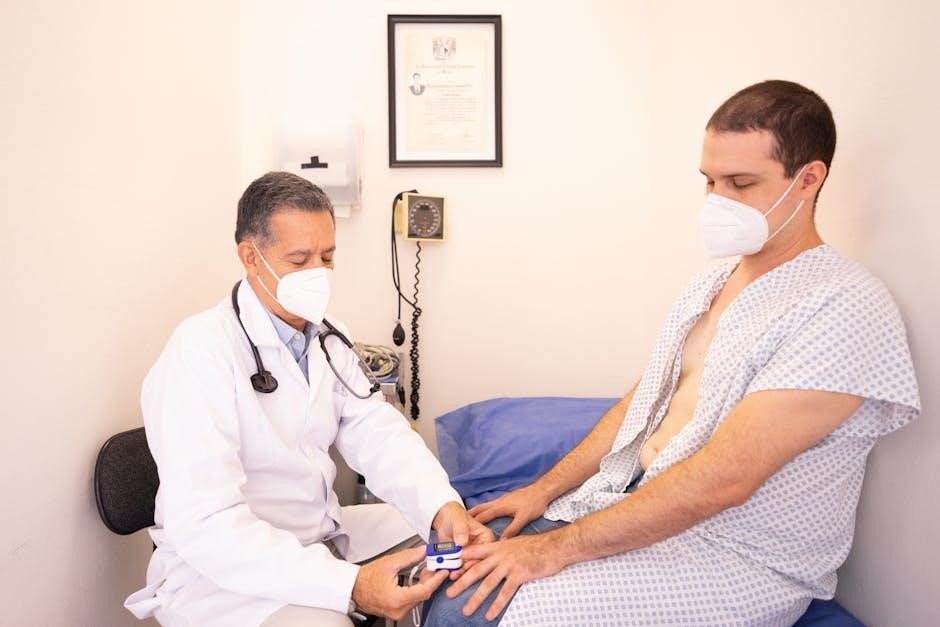
Jarvis’ Physical Examination & Health Assessment emphasizes the general survey as the initial step, encompassing observations of patient appearance, behavior, and vital signs. This foundational assessment provides crucial baseline data.
Detailed guidance is provided on accurately measuring temperature, pulse, respiration, and blood pressure, alongside pain assessment. The text stresses the importance of recognizing normal ranges and identifying deviations that warrant further investigation.
Jarvis highlights techniques for obtaining reliable vital sign measurements, considering factors like patient positioning and equipment calibration. Understanding the physiological basis of each vital sign is also emphasized, enabling nurses to interpret findings effectively and prioritize care. This systematic approach ensures a comprehensive and accurate initial assessment, informing subsequent examination steps.
Neurological Assessment: Key Elements
Jarvis’ Physical Examination & Health Assessment details a systematic approach to neurological evaluation, beginning with assessment of mental status – including level of consciousness, orientation, and cognitive function.
The text provides comprehensive guidance on cranial nerve testing, evaluating sensory function (light touch, pain, temperature, vibration, and position sense), and motor function (strength, tone, and coordination). Jarvis emphasizes the importance of observing for any neurological deficits.
Reflex assessment, including deep tendon reflexes and pathological reflexes, is thoroughly covered. The guide stresses accurate documentation of findings and interpretation in relation to potential neurological disorders. A focused neurological assessment allows for early detection of changes and informs appropriate interventions.
Cardiovascular Assessment: Auscultation & Palpation
Jarvis’ Physical Examination & Health Assessment outlines a detailed cardiovascular assessment, beginning with palpation to assess for pulsations, lifts, and thrills. The text emphasizes proper technique for locating the point of maximal impulse (PMI).
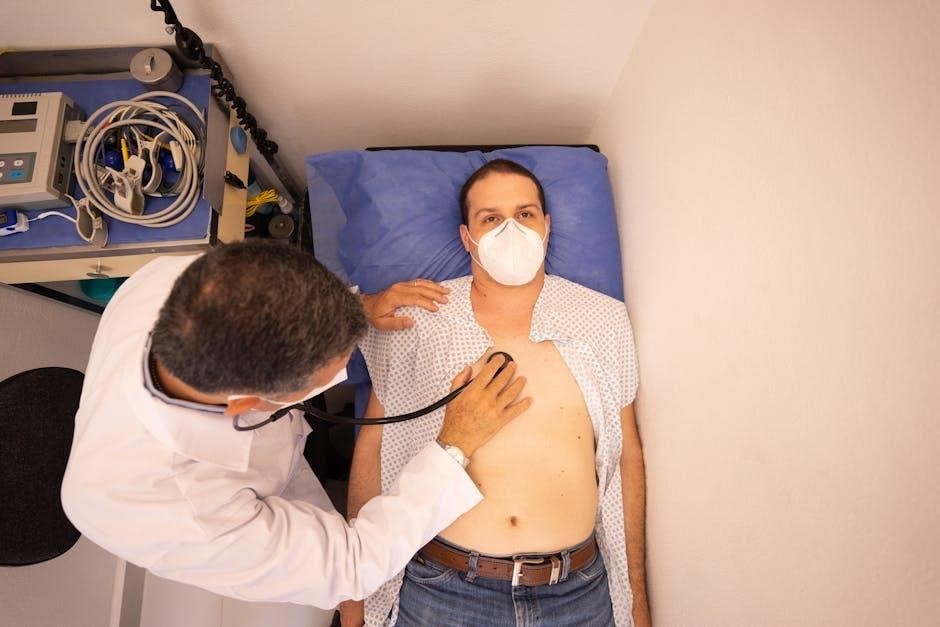
Auscultation is central, with guidance on identifying normal and abnormal heart sounds (S1, S2, S3, S4), murmurs, rubs, and clicks. Jarvis details auscultatory areas – aortic, pulmonic, Erb’s point, tricuspid, and mitral – for systematic listening.
Assessment of peripheral pulses (radial, brachial, femoral, popliteal, dorsalis pedis, and posterior tibial) is thoroughly explained, including grading pulse strength. The guide stresses correlation of findings with patient history and risk factors, aiding in the identification of cardiovascular dysfunction.
Respiratory Assessment: Inspection, Percussion, Auscultation
Jarvis’ Physical Examination & Health Assessment provides a systematic approach to respiratory evaluation, starting with inspection for respiratory rate, rhythm, and effort. Observing chest symmetry, skin color, and utilizing the diaphragm are key components.
Percussion helps determine underlying lung density, differentiating between resonance, hyperresonance, and dullness. The text details proper technique for percussing the posterior and anterior chest.
Auscultation is crucial, focusing on identifying normal breath sounds (vesicular, bronchial, bronchovesicular) and adventitious sounds like crackles, wheezes, and rhonchi. Jarvis emphasizes comparing sounds bilaterally and documenting their characteristics accurately. The guide stresses correlating findings with patient history to identify potential respiratory issues.
Gastrointestinal Assessment: Abdominal Examination
Jarvis’ Physical Examination & Health Assessment details a four-step approach to abdominal assessment: inspection, auscultation, percussion, and palpation – performed in that specific order. Inspection begins with observing the abdomen for symmetry, contour, and pulsations.
Auscultation assesses bowel sounds in all four quadrants, noting frequency and character. Percussion identifies tympany (air-filled) versus dullness (fluid or organ-filled) areas.
Light and deep palpation detect tenderness, masses, and organ enlargement. Jarvis emphasizes the importance of patient comfort and relaxation throughout the examination. Accurate documentation of findings, including location and characteristics of any abnormalities, is crucial for diagnosis and treatment planning.
Musculoskeletal Assessment: Range of Motion & Strength
Jarvis’ Physical Examination & Health Assessment outlines a systematic approach to musculoskeletal assessment, focusing on range of motion (ROM) and muscle strength. Assessment begins with inspection for symmetry, swelling, and deformities.
ROM is assessed actively (patient moves) and passively (examiner moves), noting any limitations or pain. Strength testing involves grading muscle strength on a 0-5 scale, comparing left to right sides.
Jarvis emphasizes observing for crepitus, tenderness, and muscle atrophy. Documentation should include specific joint movements assessed, degrees of ROM, and strength grades. This assessment helps identify impairments affecting mobility and function, guiding appropriate interventions and rehabilitation plans.

Special Populations & Considerations
Jarvis’ text highlights the importance of adapting assessment techniques for diverse populations, including cultural sensitivity, lifespan factors, and social determinants of health.
Cultural Considerations in Health Assessment
Jarvis’ Physical Examination & Health Assessment emphasizes that cultural competence is paramount in providing effective healthcare. The text underscores the necessity of recognizing that cultural backgrounds significantly influence health beliefs, practices, and communication styles.
Assessments must be tailored to respect individual values, avoiding ethnocentric biases. Understanding differing perceptions of pain, illness, and treatment is crucial.

Effective communication requires sensitivity to language barriers, nonverbal cues, and varying levels of health literacy. Jarvis advocates for utilizing culturally appropriate assessment tools and interpreters when needed.
Furthermore, the text stresses the importance of exploring a patient’s cultural health practices, including traditional remedies and spiritual beliefs, to provide holistic and patient-centered care. Ignoring these factors can lead to misdiagnosis or ineffective treatment plans.
Social Determinants of Health & Assessment
Jarvis’ Physical Examination & Health Assessment highlights the critical role of social determinants of health (SDOH) in influencing patient well-being. The text emphasizes that health is not solely determined by biological factors, but also by socioeconomic conditions, education, neighborhood environments, and access to resources.
A comprehensive assessment, according to Jarvis, must extend beyond traditional medical history to include inquiries about factors like food security, housing stability, transportation access, and social support networks.
Understanding these SDOH allows healthcare professionals to identify vulnerabilities and advocate for interventions that address systemic inequities.
The text encourages clinicians to utilize screening tools and community resources to connect patients with support services. Recognizing the impact of SDOH is essential for delivering equitable and effective healthcare, ultimately improving patient outcomes.
Lifespan Considerations: Pediatric Assessment
Jarvis’ Physical Examination & Health Assessment dedicates significant attention to the unique considerations of pediatric assessment; Recognizing that children differ physiologically and developmentally from adults, the text stresses age-appropriate techniques and communication strategies.
The approach emphasizes creating a comfortable and trusting environment to minimize anxiety and facilitate cooperation. Jarvis details modifications to examination procedures based on the child’s age, including utilizing play, distraction, and parental involvement.
Growth parameters, developmental milestones, and variations in normal findings are thoroughly discussed.
The text also highlights the importance of family-centered care, incorporating parental observations and concerns into the assessment process. A systematic and sensitive approach, guided by Jarvis, ensures accurate and holistic evaluation of pediatric patients.
Lifespan Considerations: Geriatric Assessment
Jarvis’ Physical Examination & Health Assessment provides detailed guidance on adapting assessment techniques for the geriatric population. Recognizing age-related physiological changes, the text emphasizes a sensitive and patient-focused approach.
The assessment of older adults requires consideration of factors like decreased sensory function, chronic illnesses, and polypharmacy. Jarvis stresses the importance of allowing ample time for examination, providing clear explanations, and ensuring patient comfort.
Modifications to techniques, such as supporting limbs during examination and adjusting the environment to minimize distractions, are highlighted.
Cognitive assessment, functional status evaluation, and screening for common geriatric syndromes are also addressed. A comprehensive geriatric assessment, as outlined by Jarvis, promotes holistic care and supports optimal health outcomes for older adults.
Resources & Further Learning
Jarvis’ Physical Examination & Health Assessment offers a valuable test bank for practice. Digital and eTextbook versions are accessible, utilizing ISBN 9780323550031.
Utilizing the Jarvis PDF Test Bank
The Jarvis PDF test bank is an invaluable resource for students and educators alike, designed to reinforce learning and assess comprehension of key concepts presented in Physical Examination & Health Assessment. This robust collection of multiple-choice questions directly correlates with the textbook’s content, allowing for focused review of each chapter’s objectives.
These questions are crafted to promote critical thinking and application of knowledge, mirroring the types of questions encountered in academic settings and professional certifications. Educators can leverage the test bank to create customized quizzes and exams, while students can utilize it for self-assessment and identifying areas requiring further study.
Access to the test bank often accompanies instructor resources associated with the textbook, ensuring alignment with the 8th Edition by Carolyn Jarvis and Anne Browne. It’s a powerful tool for mastering the skills essential for proficient health assessment.
Accessing Digital & eTextbook Versions (ISBN: 9780323550031)
Physical Examination & Health Assessment by Carolyn Jarvis is readily available in convenient digital and eTextbook formats, identified by the ISBN: 9780323550031. These versions offer students and practitioners enhanced learning experiences with features like searchable text, interactive exercises, and integrated multimedia resources.
Accessing the eTextbook often requires purchasing through platforms like Pearson or VitalSource, providing options for rental or permanent ownership. Digital formats allow for study on various devices – laptops, tablets, and smartphones – promoting flexibility and accessibility.
Furthermore, the digital edition often includes supplementary materials not found in the print version, enriching the learning process. Students benefit from a streamlined and portable learning tool, while instructors appreciate the ease of integration into online courses.